


Providing access to the machines you need
Levels Above can cater to your machine requirements with ease, simply contact our Hire Desk to let us know what you need today:

Hire Desk
Unit D, Fox Way, Trinity Business Park, Wakefield, WF2 8EE
Levels Above can cater to your machine requirements with ease, simply contact our Hire Desk to let us know what you need today:
Unit D, Fox Way, Trinity Business Park, Wakefield, WF2 8EE
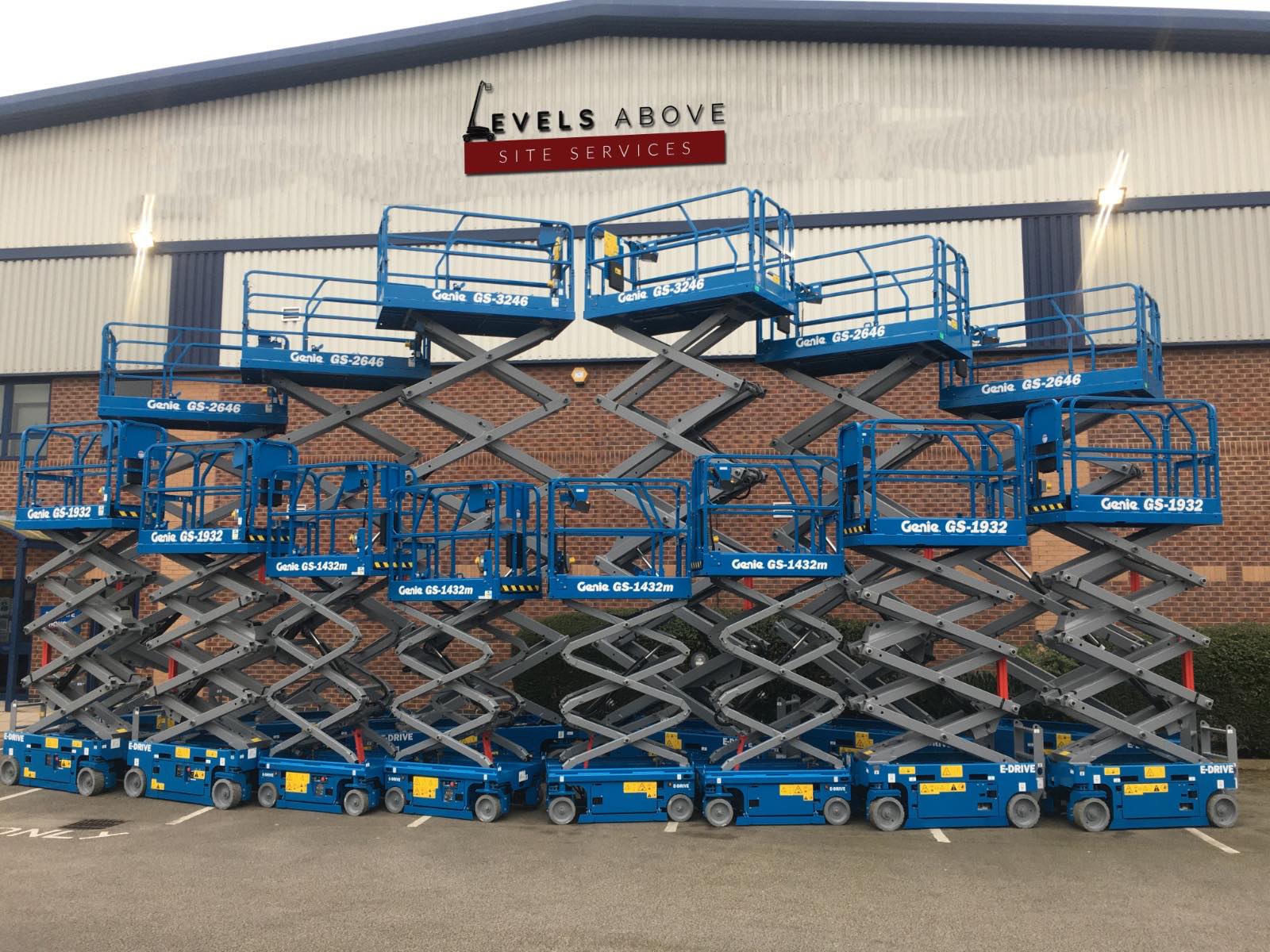

Some equipment names describe a mechanism. Others come with a story. According to Genie's own company history, its name traces back to a material hoist powered by bottled compressed air: the lifting effect suggested a little magic from a bottle.
It is an entertaining origin for a name now seen on modern access equipment, but the original machine and a current scissor lift do different jobs. That distinction is part of what makes the story interesting.
Genie dates its beginnings to 1966, when Bud Bushnell acquired the rights to a compressed-air material-lifting device. The company's published account connects the response to that lifting mechanism with the Genie name.
The important word is material. The early hoist was intended to lift loads, not a modern personnel platform with a guarded working area. A machine's lifting ability does not on its own make it suitable for carrying people.
The range developed over time. Genie's history identifies the Z-30/20 boom in 1984 and the introduction of its scissor-lift range in 1997. Those later machines belong to the broader story of powered access rather than simply being bigger versions of the original material hoist.
The photograph above shows modern fleet equipment; it is not an image of the 1966 hoist. When looking at an equipment history, it is useful to keep the date and purpose of each machine clear rather than treating a shared brand name as a single design.
Access and lifting terminology often overlaps in everyday conversation. Someone may ask for a lift when they mean a work platform, a material hoist, a boom or a forklift. The required task is a better starting point than the nickname.
If people need an elevated working position, describe where that position is and what they will take with them. If the task is moving goods, describe the load and destination. Equipment should be selected and used for its intended purpose, with the relevant documentation and instructions.
The name story does not tell us which current machine is best for a job. For that, the same practical questions still apply: height, outreach, load, access route, ground or floor conditions and power arrangements.
A modern scissor lift may be suitable for direct overhead work, while a boom can provide a different route to the working position. You can compare the two in our scissor lift vs cherry picker guide, or start with what powered access means.
So the next time you spot the Genie name on a platform, you have a story to go with it: the manufacturer traces it to a bottle-powered material hoist, long before the current range. It is a reminder that familiar equipment categories have often grown from a very specific problem someone wanted to solve.
Tell us whether the task involves a working platform or a load, where it needs to reach and the access available. We can help start the right equipment conversation.
Call 0330 058 0982 or email hire@levelsaboveltd.co.uk.
Sources checked in November 2026. For equipment specifications, use the documentation for the machine and configuration supplied.