


Providing access to the machines you need
Levels Above can cater to your machine requirements with ease, simply contact our Hire Desk to let us know what you need today:

Hire Desk
Unit D, Fox Way, Trinity Business Park, Wakefield, WF2 8EE
Levels Above can cater to your machine requirements with ease, simply contact our Hire Desk to let us know what you need today:
Unit D, Fox Way, Trinity Business Park, Wakefield, WF2 8EE
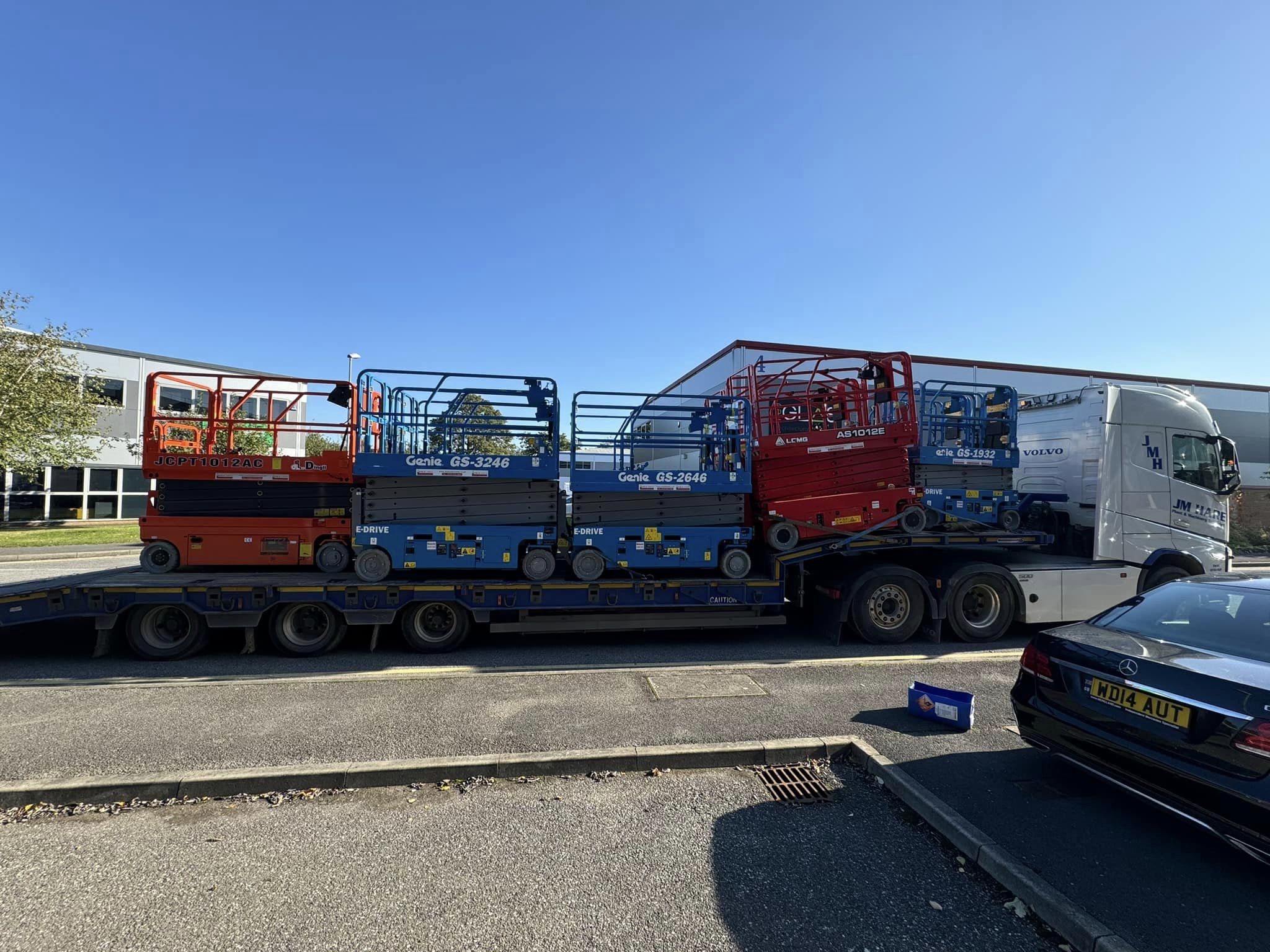

Country of origin can be interesting when you are comparing access equipment, but it is a poor shortcut for deciding which machine is right for the job. A brand's birthplace, current ownership, engineering locations and the factory that built a particular machine can be different things.
A better question is whether the exact machine meets the work requirement and has the documentation, condition and support the job needs. Knowing more about where it comes from can inform that conversation without turning national labels into a quality ranking.
It can tell you something about a company's history. It does not necessarily identify where every model is made or where every component originates. International manufacturing and research arrangements make broad labels less precise than they first appear.
| Manufacturer | What the published account establishes | What it does not establish |
|---|---|---|
| Niftylift | Founded in Bedfordshire in 1985, with subsequent UK manufacturing history. | The specification or suitability of every individual machine. |
| Genie | Its history describes production in the United States, Italy and China. | That every Genie model is built in America. |
| Dingli | A Zhejiang-based manufacturer whose profile also describes international R&D centres. | That engineering activity is limited to one country. |
| Haulotte | Its business-model page describes factories in France, Romania, China and the US. | The factory of a particular machine without model-specific evidence. |
Use the manufacturer's information and the particular machine's identification and documents to establish its details. Avoid guessing the factory from a paint colour or brand name.
The first filter is still the task. Check the required platform position, full working envelope, permitted load, access dimensions and suitable operating environment. A machine from a preferred country that cannot reach the task is not a useful choice.
Two models may share a headline height but differ in outreach, weight, basket size, power system and transport needs. Our boom lift comparison guide shows why a few carefully chosen specifications are more helpful than an overall brand winner.
For a used machine, ask what is known about its service history and condition. For a hire machine, establish which model is being supplied, the relevant documentation and how it will be handed over. A country label cannot answer these questions for an individual item.
Where work must continue over a longer period, discuss maintenance arrangements, examinations and what happens if a fault interrupts the job. Different suppliers or agreements can provide different levels of support even when the equipment carries the same badge.
The answers should come from the actual offer. A national reputation does not guarantee a particular response time, while an unfamiliar brand name does not by itself prove poor support. Ask for the arrangements that matter to your site.
An attractive initial price can be only one part of the decision. Transport, servicing, downtime arrangements, energy and eventual resale assumptions can change a longer-term comparison. Equally, paying more is not evidence on its own that the equipment suits the work better.
If you are deciding between ownership and an ongoing hire arrangement, compare the same specification over the same period. Our hire, buy and contract-hire guide includes a calculator for exploring your own assumptions.
There is no defensible universal answer from country alone. Use origin as factual background, then make a model-by-model decision based on capability, condition, documentation and support. That approach gives you something more useful than a flag-based winner: a machine and arrangement that fit the job.
Explore our powered access options or ask about long-term hire if you have an ongoing requirement.
Give us the task and site details. We can discuss suitable available machines and the support arrangements for your requirement.
Call 0330 058 0982 or email hire@levelsaboveltd.co.uk.
Sources checked in November 2026. For equipment specifications, use the documentation for the machine and configuration supplied.